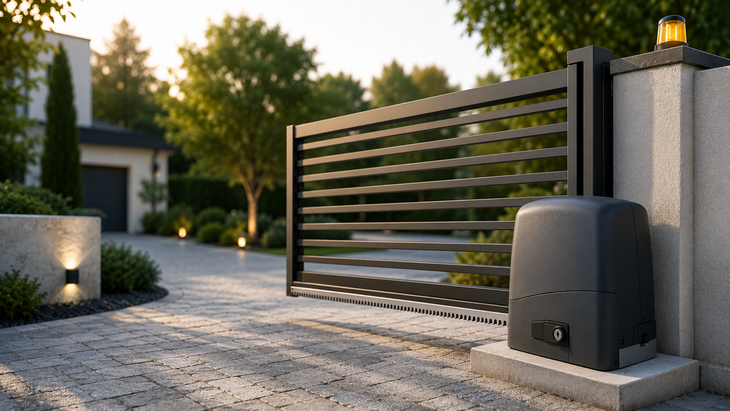


Why Is My Automatic Gate Opening Slowly? 10 Common Causes and How to Fix Them
Is your automatic gate opening more slowly than it used to? This is one of the most common issues affecting gate automation systems and, although it may initially seem like a minor inconvenience, it is often the first indication that something is not working correctly.
A gate that gradually loses speed may be suffering from mechanical wear, lack of maintenance, electrical faults or even an automation system that is no longer suitable for the weight of the gate. Ignoring these warning signs can lead to more serious failures, expensive repairs and even compromise the safety of people and vehicles.
In this comprehensive guide, we explain the most common reasons why an automatic gate may begin opening slowly, how to identify the source of the problem and when it is advisable to contact a professional gate automation specialist.

Why You Should Never Ignore a Slow Automatic Gate
It is perfectly normal for an automation system to experience some wear after years of use. However, a noticeable reduction in opening or closing speed should never be considered normal.
A slow-moving gate often indicates that the motor is working harder than it should or that one or more mechanical components are creating excessive resistance.
Continuing to operate the system under these conditions may result in:
- Premature motor wear.
- Higher electricity consumption.
- Electronic component failures.
- Accelerated wear of the rack, hinges or rollers.
- A shorter lifespan for the automation system.
- Complete system failure.
The sooner the cause is identified, the simpler and less expensive the repair is likely to be.
How to Diagnose the Problem Before Calling a Technician
Before assuming that the motor has failed, there are several simple checks that every property owner can carry out.
Ask yourself the following questions:
- Has the gate always opened slowly, or has the problem only appeared recently?
- Does the problem occur when opening, closing or both?
- Is the motor noisier than usual?
- Does the gate move unevenly or jerk during operation?
- Does the issue only occur during very hot or very cold weather?
- Do the remote controls respond normally?
The answers to these questions can provide valuable information and help a technician identify the problem much more quickly.
1. Lack of Lubrication
This is probably the most common reason why an automatic gate begins opening slowly.
Over time, hinges, bearings, rollers, shafts and other moving parts collect dust, moisture and small particles that significantly increase friction.
As resistance increases, the motor has to work much harder to move the gate.
Typical Signs
- Heavier gate movement.
- Metallic noises.
- Clicking or creaking sounds.
- Reduced opening speed.
How to Fix It
Clean all moving components thoroughly and apply the lubricant recommended by the manufacturer. Avoid using unsuitable grease or oils, as these often attract dirt and may worsen the problem over time.
Regular lubrication is one of the simplest ways to prevent unnecessary wear and extend the life of your automation system.
2. Dirty Tracks or Rack
For sliding gates, even a small amount of sand, leaves, stones or other debris can create enough resistance to slow down the gate considerably.
This problem is particularly common in outdoor installations and coastal areas, where wind continuously carries sand and dust onto the track.
Typical Symptoms
- Uneven movement.
- The gate slows down at certain points.
- Grinding noises from the rack.
- The motor appears to struggle.
How to Fix It
Carefully clean the entire track and rack, removing any debris that could interfere with movement.
At the same time, inspect the rollers to ensure none are damaged or misaligned.
3. Worn Rollers or Bearings
The rollers and bearings support the entire weight of the gate.
As these components wear, friction increases and the motor must generate much greater force to move the gate.
In some cases, a single worn bearing can significantly increase the load placed on the automation system.
How to Identify the Problem
- Continuous noise.
- Heavy movement.
- Vibration during opening.
- Intermittent sticking or resistance.
How to Fix It
Worn rollers and bearings should be replaced as soon as excessive wear is detected. Continuing to operate the gate in this condition may eventually damage both the motor and the gate structure.
4. An Undersized Gate Motor
Sometimes the problem is not caused by a fault at all.
In many cases, the installed motor was simply never powerful enough for the gate it operates.
An undersized motor may function adequately for some time, but constant overloading gradually reduces its performance.
This situation often occurs when:
- The original gate has been replaced with a heavier model.
- Additional cladding or panels have been fitted.
- The automation system was selected based solely on price.
How to Fix It
In these situations, replacing the existing motor with one that is correctly sized may be the most reliable long-term solution.
If you are unsure which automation system is suitable for your gate, read our Complete Guide to Choosing the Right Automatic Gate Motor, where we explain how to select the correct motor based on gate weight, size and daily usage.
5. Unstable Electrical Supply
Automatic gate systems require a stable electrical supply to perform correctly.
Voltage fluctuations, loose electrical connections or faults within the control board can reduce the power available to the motor.
Common Symptoms
- The gate opens slowly.
- Variable operating speed.
- Reduced motor power.
- Unexpected stops during operation.
Electrical and electronic faults should always be diagnosed by a qualified technician, as specialised equipment is usually required to identify the exact cause.
6. Misaligned or Dirty Photocells
Photocells are one of the most important safety components in an automatic gate system. Their purpose is to detect people, vehicles or obstacles while the gate is moving.
If the photocells become misaligned, dirty or faulty, the control board may incorrectly detect an obstacle, causing the gate to slow down, stop unexpectedly or reverse its movement.
Common Symptoms
- The gate starts moving and then suddenly stops.
- Slow or intermittent operation.
- The gate opens normally but closes slowly.
- Irregular operation during rainy or humid weather.
How to Fix It
Carefully clean the photocell lenses using a soft cloth and check that both units are correctly aligned. If the problem persists, there may be a fault in the sensor itself or in the wiring.
7. Worn Motor Capacitor
In 230V gate motors, one of the most common faults is a failing capacitor.
The capacitor provides the electrical boost required to start the motor. As it ages, its capacity gradually decreases, reducing the motor's starting torque and overall performance.
The gate may continue to operate, but much more slowly than normal.
Typical Symptoms
- The motor makes a humming noise before starting.
- The gate opens more slowly than usual.
- The motor appears to lack power.
- Reduced operating speed.
How to Fix It
In many cases, replacing the capacitor completely restores the motor's performance. It is generally an inexpensive repair when carried out by a qualified technician.
8. Natural Motor Wear
Like any mechanical equipment, automatic gate motors wear over time.
After thousands of opening and closing cycles, internal gears, bearings and transmission components gradually lose efficiency.
This wear often results in a gradual reduction in operating speed.
Typical Signs
- Gradual loss of power.
- Increased operating noise.
- The motor becomes unusually hot.
- Less smooth operation.
If your automation system is more than 15 years old and has started developing multiple faults, replacing it with a modern, more efficient system may be the most cost-effective long-term solution.
9. Electronic Control Board Problems
The electronic control board is the brain of the entire automation system.
It controls the motor, receives commands from remote controls, manages all safety devices and regulates the operating speed.
If the control board develops a fault or is incorrectly configured, it may cause:
- Reduced operating speed.
- Irregular movement.
- Unexpected stops.
- Unpredictable operation.
Possible Causes
- Incorrect programming.
- Power surges.
- Moisture damage.
- Failed electronic components.
Repairs involving the electronic control board should always be carried out by a qualified technician using the appropriate diagnostic equipment.
10. Extreme Environmental Conditions
Not every slow automatic gate is caused by a mechanical or electrical fault.
Environmental conditions can also have a significant impact on the performance of an automation system.
Common factors include:
- High temperatures.
- Very cold weather.
- Excessive humidity.
- Salt corrosion in coastal areas.
- Strong winds.
- Dust and sand build-up.
In coastal regions such as the Algarve, automation systems are frequently exposed to salt-laden air, which accelerates corrosion of metal components.
Regular maintenance helps minimise these effects and significantly extends the lifespan of the entire system.
When Should You Call a Professional?
Some simple issues, such as cleaning the track or photocells, can often be resolved by the property owner. However, there are situations where professional assistance is essential.
We recommend contacting a qualified technician if:
- The motor makes noise but the gate barely moves.
- The gate repeatedly stops during operation.
- You notice a burning smell.
- The circuit breaker trips whenever the gate operates.
- The control board displays error messages.
- The gate opens or closes unexpectedly.
- There are visible signs of wear on the motor or gate structure.
Continuing to use the system under these conditions may result in further damage and considerably higher repair costs.
Should You Repair or Replace the Automation System?
This is one of the questions we are asked most frequently.
In many cases, repairing the system is the most sensible option, particularly when the fault is detected early and the equipment is still in good overall condition.
However, replacing the automation system may be the better investment when:
- The motor is more than 15 years old.
- Breakdowns have become frequent.
- Spare parts are no longer available.
- You want to improve safety.
- You would like smartphone, Wi-Fi or smart home integration.
Modern automation systems offer greater energy efficiency, quieter operation, improved obstacle detection and full compatibility with today's access control technologies.
How to Prevent Your Automatic Gate from Becoming Slow Again
The best way to avoid breakdowns and ensure your automatic gate continues operating quickly and smoothly is through regular preventive maintenance. Just like a car requires routine servicing, an automatic gate system should be inspected periodically to keep it operating safely and efficiently.
Proper maintenance helps to:
- Significantly reduce motor wear.
- Prevent unexpected breakdowns.
- Improve the safety of the entire system.
- Extend the lifespan of the automation.
- Reduce long-term repair costs.
Recommended Maintenance Schedule
Every Month
- Check that the gate opens and closes smoothly.
- Listen for unusual noises during operation.
- Clean the track on sliding gates.
- Visually inspect the safety photocells.
- Ensure all remote controls operate correctly.
Every Six Months
- Lubricate hinges, rollers and other moving parts.
- Inspect the rack alignment.
- Check all electrical connections.
- Test the manual release mechanism.
- Verify that all safety devices are operating correctly.
Once a Year
Arrange a full inspection by a qualified gate automation specialist.
During this service the technician should inspect:
- The motor.
- The electronic control board.
- The motor capacitor (where applicable).
- Opening and closing forces.
- Safety photocells.
- Flashing warning light.
- Mechanical wear.
- Mounting brackets and fixings.
How Long Should an Automatic Gate Last?
When professionally installed and properly maintained, an automatic gate system can provide many years of reliable service.
Typical lifespans are:
| Component | Typical Lifespan |
|---|---|
| Gate Motor | 10–20 years |
| Safety Photocells | 8–15 years |
| Electronic Control Board | 10–15 years |
| Remote Controls | 5–10 years |
| Rollers & Bearings | Depends on usage |
These figures vary depending on the frequency of use, environmental conditions and the quality of the installation.
Frequently Asked Questions
Why does my automatic gate only open slowly during summer?
High temperatures can cause the motor to overheat or affect the performance of certain electronic components. Dust and sand are also more common during dry weather, increasing friction within the gate mechanism.
Why does my gate open normally but close slowly?
This may be caused by incorrect control board settings, safety sensors, mechanical resistance or general wear within the automation system.
Can a weak motor cause my gate to open slowly?
Yes. An undersized or ageing motor may struggle to move the gate efficiently, particularly if the gate has become heavier over time or is used frequently.
Is it worth repairing an old gate motor?
It depends on the age of the equipment, the availability of spare parts and the overall condition of the system. In many cases a repair is worthwhile, but replacing an ageing system may offer better long-term value.
Can I increase my gate's opening speed?
Some automation systems allow the opening speed to be adjusted through the electronic control board. However, any changes must comply with the manufacturer's safety limits and should only be carried out by a qualified technician.
How often should an automatic gate be serviced?
For residential properties, an annual professional service is generally recommended. Commercial and industrial installations with higher daily usage may require maintenance every six months.
When Is It Time to Replace Your Gate Automation?
Although many faults can be repaired successfully, there are situations where replacing the automation system is the safest and most cost-effective solution.
You should consider installing a new automation system if:
- The motor is more than 15 to 20 years old.
- Breakdowns are becoming increasingly frequent.
- Replacement parts are no longer available.
- Energy consumption has increased significantly.
- You want smartphone, Wi-Fi or smart home integration.
- You require improved safety features.
Modern automation systems offer quieter operation, improved energy efficiency, advanced obstacle detection and seamless integration with today's access control technologies.
Why Choose Controlportas?
At Controlportas, we provide professional technical assistance for residential, commercial and industrial automatic gate systems.
Our experienced technicians work with a wide range of gate automation manufacturers and can quickly identify the cause of a fault before recommending the most appropriate solution.
Our services include:
- Professional diagnostics.
- Automatic gate repairs.
- Gate motor replacement.
- Preventive maintenance.
- Installation of new automation systems.
- Modernisation of existing gate automation.
- Access control integration.
An automatic gate that opens slowly is usually an early warning that something within the system requires attention.
In many cases, identifying and resolving the issue early can prevent more serious damage and considerably reduce repair costs.
Ignoring the warning signs may lead to expensive failures, reduced safety and a much shorter lifespan for the entire automation system.
If your gate is no longer operating as smoothly or as quickly as it once did, arranging a professional inspection is the best way to prevent further problems.
Contact Controlportas for expert advice, professional diagnostics and reliable automatic gate repair and maintenance services.