

How to Choose the Right Automatic Gate Motor: The Complete Buying Guide
Choosing the right automatic gate motor is one of the most important decisions when installing or upgrading an automated gate. The correct motor ensures reliable operation, improves security, reduces maintenance costs and provides years of dependable performance. On the other hand, selecting the wrong motor can lead to premature wear, poor performance and expensive repairs.
Whether you are automating a new gate or upgrading an existing one, understanding the different types of motors, their capabilities and the factors that influence their performance will help you make an informed decision.
In this complete buying guide, we'll explain everything you need to know before purchasing an automatic gate motor, from gate types and motor technologies to safety features, maintenance and professional installation.
Why Choosing the Right Motor Matters
Many property owners believe that all gate motors perform the same task. In reality, every installation is different.
The ideal motor depends on several factors including:
- Gate type
- Gate weight
- Gate length
- Frequency of use
- Wind exposure
- Residential or commercial application
- Required opening speed
- Safety requirements
A motor designed for a lightweight residential gate will struggle if installed on a heavy industrial entrance. Likewise, a motor intended for occasional daily use may fail prematurely if used hundreds of times every day.
Choosing correctly from the beginning protects your investment and guarantees reliable operation for many years.
How Does an Automatic Gate Motor Work?
An automatic gate motor converts electrical energy into controlled mechanical movement, allowing a gate to open and close safely at the press of a button.
A complete automation system normally includes:
- Electric motor
- Electronic control board
- Remote controls
- Safety photocells
- Flashing warning light
- Manual release system
- Limit switches
- Optional GSM, Wi-Fi or smartphone control
When a command is received, the control board activates the motor, which moves the gate while continuously monitoring safety devices. If an obstacle is detected, modern systems immediately stop or reverse movement to prevent accidents.
Today's automation systems are far more intelligent than older installations, offering smoother operation, obstacle detection, programmable opening speeds and remote management.
Step 1 – Identify Your Gate Type
The first step is determining what type of gate you have, as this directly affects the type of motor required.
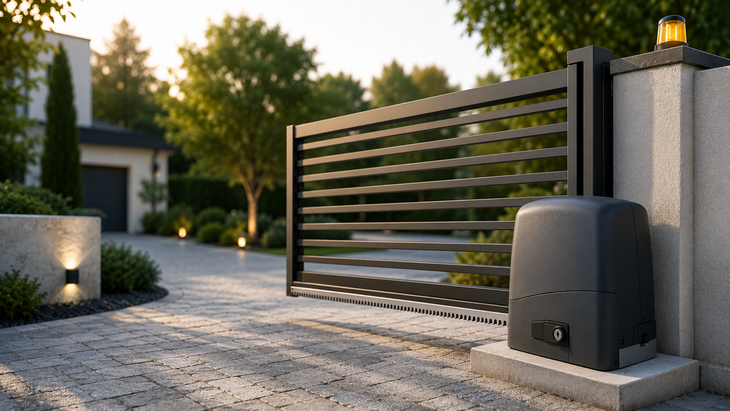
Sliding Gates
Sliding gates move horizontally along a track using rollers.
They are ideal when:
- There is limited space behind the gate
- The entrance is wide
- The gate is particularly heavy
- High reliability is required
Sliding gate motors use a toothed rack fixed to the gate. As the motor rotates its pinion gear, the gate moves smoothly along the track.
Sliding gate systems are generally recommended for commercial properties, industrial facilities and larger residential entrances.
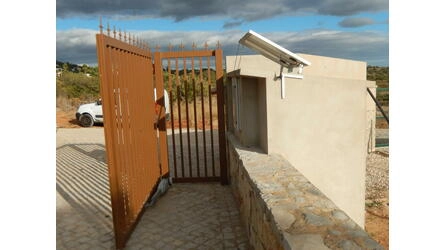
Swing Gates
Swing gates open inward or outward using hinges, much like a traditional door.
They are particularly popular for:
- Residential villas
- Private homes
- Driveways
- Decorative entrance gates
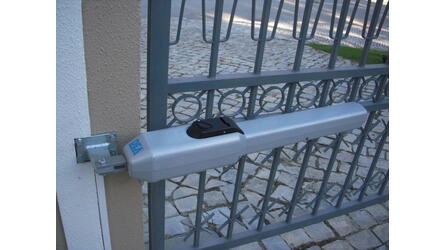
Depending on the installation, swing gates may use articulated arm motors or underground operators.
Each solution has advantages depending on available space, aesthetics and gate construction.
Step 2 – Gate Weight Is More Important Than Gate Size
One of the biggest mistakes people make is choosing a motor based only on the gate's dimensions.
In reality, gate weight is the most important specification.
For example:
| Gate Weight | Typical Application |
|---|---|
| Up to 300 kg | Small residential gates |
| 300–600 kg | Standard family homes |
| 600–1000 kg | Large residential and commercial entrances |
| Over 1000 kg | Industrial gates |
A heavier gate requires greater torque and a motor specifically designed for continuous heavy-duty operation.
Installing an undersized motor may initially work but will dramatically reduce its lifespan.
Step 3 – How Often Will the Gate Be Used?
Usage frequency is another factor often overlooked.
A gate that opens six times per day requires a completely different motor from one operating hundreds of times daily.
| Application | Typical Daily Cycles |
|---|---|
| Residential | 5–20 openings |
| Condominiums | 30–100 openings |
| Commercial | 50–200 openings |
| Industrial | 200+ openings |
Choosing a motor with the correct duty cycle prevents overheating and unnecessary wear.
Environmental Conditions Also Matter
Professional installers also consider the environment where the gate operates.
Important factors include:
- Strong coastal winds
- Corrosion caused by sea air
- Steep driveways
- Uneven ground
- Snow or heavy rain
- High summer temperatures
For example, properties located along the Algarve coastline often require corrosion-resistant components due to salt exposure.
Likewise, solid gates exposed to strong winds require more powerful motors because the wind significantly increases the force needed to move the gate.
Professional Installation Makes the Difference
Even the highest-quality gate motor cannot compensate for poor installation.
Correct alignment, proper foundations, accurate motor positioning and precise safety adjustments are essential to ensure reliable operation.
A professionally installed automation system will:
- Operate more quietly
- Require less maintenance
- Consume less electricity
- Last considerably longer
- Provide safer operation
For this reason, investing in professional installation is just as important as selecting the right equipment.
Step 4 – Should You Choose a 24V or 230V Gate Motor?
One of the most common questions homeowners ask is whether a 24V or 230V motor is the better choice. The answer depends on how the gate will be used, the weight of the gate and the features you require.
Both systems are highly reliable when correctly selected, but each offers distinct advantages.
24V Gate Motors
Modern 24V motors have become increasingly popular thanks to their efficiency, advanced safety features and compatibility with smart automation systems.
Main advantages of 24V motors:
- Smoother and quieter operation
- Excellent for intensive daily use
- Lower energy consumption
- Obstacle detection with automatic reversal
- Compatible with backup battery systems
- Ideal for smart home integration
Because they operate at a lower voltage, 24V systems offer enhanced safety and are particularly suitable for residential properties, condominiums and commercial entrances with frequent daily use.
230V Gate Motors
230V motors have traditionally been the preferred solution for larger and heavier gates requiring maximum pulling power.
Main advantages of 230V motors:
- High torque for heavy gates
- Simple and robust mechanical design
- Excellent for large industrial entrances
- Reliable long-term performance
- Suitable for demanding environments
These motors remain an excellent option for industrial applications and oversized gates where maximum power is the priority.
24V vs 230V: Which Is Better?
| Feature | 24V Motor | 230V Motor |
|---|---|---|
| Residential Use | ★★★★★ | ★★★★☆ |
| Industrial Use | ★★★★☆ | ★★★★★ |
| Heavy Gates | ★★★★☆ | ★★★★★ |
| Battery Backup | ★★★★★ | ★☆☆☆☆ |
| Obstacle Detection | ★★★★★ | ★★★★☆ |
| Energy Efficiency | ★★★★★ | ★★★☆☆ |
| Smart Home Compatibility | ★★★★★ | ★★★★☆ |
Rather than asking which motor is "better", the correct question is which motor is best suited to your specific installation.
Step 5 – Essential Safety Features
Modern gate automation is about much more than convenience. Safety is one of the most important aspects of any installation.
A quality automation system should include several protection mechanisms that help prevent accidents and protect both people and vehicles.
Photocells
Photocells create an invisible safety beam across the entrance. If the beam is interrupted while the gate is moving, the motor immediately stops or reverses.
Obstacle Detection
Modern control units continuously monitor motor resistance. If the gate encounters an obstacle, movement is automatically interrupted to minimise the risk of injury or damage.
Flashing Warning Lights
A flashing light warns pedestrians and drivers whenever the gate is opening or closing, improving visibility and safety.
Manual Release System
Every automated gate should include a manual release mechanism, allowing the gate to be operated manually during a power failure or emergency.
Backup Batteries
Many modern 24V systems can continue operating during power outages using integrated backup batteries, ensuring uninterrupted access to your property.
Step 6 – Can an Existing Gate Be Automated?
One of the biggest misconceptions is that installing automation requires replacing the entire gate.
In reality, most existing gates can be successfully automated.
Before installation, a professional technician will assess:
- The overall condition of the gate
- Structural integrity
- Hinge condition
- Track alignment (for sliding gates)
- Available installation space
- Electrical supply
If the gate is structurally sound, adding automation is usually a straightforward process that significantly improves convenience and security.
Step 7 – Common Mistakes When Buying a Gate Motor
Many automation problems begin before the motor is even installed. Avoiding these common mistakes can save considerable time and money.
Buying Based Only on Price
The cheapest motor is rarely the most economical solution over the long term. Quality components typically provide greater reliability and lower maintenance costs.
Ignoring Gate Weight
Selecting a motor with insufficient capacity places constant strain on the mechanism and dramatically shortens its lifespan.
Not Considering Future Usage
If the property may be expanded or converted into a condominium or commercial facility, choosing a motor designed for higher operating cycles is often a worthwhile investment.
Poor Installation
Even the best motor cannot compensate for a poorly aligned gate or incorrect installation.
Ignoring Maintenance
Regular maintenance is essential for ensuring long-term reliability and preventing costly repairs.
Step 8 – Should You Repair or Replace Your Existing Gate Motor?
Many customers ask whether they should repair their current motor or install a new one.
There is no universal answer, but several factors should be considered.
Repair Is Often the Best Option When:
- The motor is relatively new
- The fault is electrical or electronic
- Replacement parts are readily available
- The gate remains in good condition
Replacement May Be More Cost-Effective When:
- The motor is more than 15 years old
- Replacement parts are no longer available
- Repairs have become frequent
- The automation no longer meets current safety standards
- You wish to upgrade to smart automation features
A professional assessment is always the best way to determine the most economical and reliable solution.
Step 9 – Regular Maintenance Extends the Life of Your Gate Motor
Even the highest-quality automatic gate motor requires regular maintenance to continue operating safely and efficiently. Preventive maintenance not only reduces the risk of unexpected breakdowns but also extends the lifespan of the entire automation system.
Many failures that result in expensive repairs begin as small issues that could have been identified during a routine inspection.
Monthly Checks
- Observe whether the gate opens and closes smoothly.
- Listen for unusual noises during operation.
- Check that the remote controls respond correctly.
- Keep the gate track free from leaves, stones and debris.
- Inspect the photocells and ensure they are clean.
Every Six Months
- Lubricate hinges, rollers and moving components (where applicable).
- Inspect electrical connections.
- Check rack alignment on sliding gates.
- Test the manual release system.
- Verify the flashing warning light operates correctly.
Annual Professional Maintenance
A qualified technician should inspect the automation system at least once a year. During a professional service, the following are typically checked:
- Motor performance
- Electronic control board
- Safety devices
- Opening and closing forces
- Mechanical wear
- Limit switch calibration
- Overall system safety
Routine maintenance significantly reduces long-term operating costs and helps prevent unexpected failures.
How Long Does an Automatic Gate Motor Last?
One of the most common questions from customers is how long an automatic gate motor should last.
The answer depends on several factors:
- Motor quality
- Correct sizing
- Installation quality
- Daily operating cycles
- Environmental conditions
- Maintenance frequency
Under normal conditions, a professionally installed and properly maintained gate motor can provide reliable operation for 10 to 20 years, and often even longer.
Regular servicing is one of the best investments you can make to maximise the lifespan of your automation system.
Smart Automation: More Than Just a Remote Control
Today's automatic gate systems offer much more than simple remote operation. Modern automation technology provides enhanced convenience, security and connectivity.
Depending on the system, your gate can be operated using:
- Remote controls
- Wireless keypads
- RFID cards and tags
- Video intercom systems
- Smartphone applications
- Wi-Fi connectivity
- GSM mobile phone control
- Smart home platforms
These features allow property owners to monitor and control access remotely while improving overall security and user convenience.
How Much Does It Cost to Automate a Gate?
The cost of gate automation depends on several factors, including:
- Gate type
- Gate size and weight
- Motor type
- Installation complexity
- Safety accessories
- Access control options
Rather than choosing the lowest-priced solution, it is advisable to invest in equipment that matches the intended use of the gate. A correctly specified automation system often proves more economical over its lifetime due to reduced maintenance and improved reliability.
Frequently Asked Questions
Can any gate be automated?
Most existing sliding and swing gates can be automated provided they are structurally sound and correctly aligned.
Which motor is better for a residential property?
In many residential applications, modern 24V motors offer an excellent balance of safety, efficiency and intelligent functionality.
Can automatic gates work during a power cut?
Many 24V systems can continue operating using backup batteries. All automated gates should also include a manual release mechanism.
How often should maintenance be carried out?
Residential gates should be professionally serviced at least once a year, while commercial and industrial installations may require more frequent inspections depending on usage.
Is gate automation safe for children and pets?
Yes. Modern automation systems incorporate photocells, obstacle detection and force limitation systems designed to maximise user safety.
Can I control my gate with my smartphone?
Yes. Many modern automation systems can be integrated with Wi-Fi or GSM modules, allowing remote operation using a smartphone.
How long does installation take?
Most residential gate automation installations can be completed within one day, although larger commercial projects may require additional time.
Should I repair or replace an old gate motor?
This depends on the age of the equipment, the availability of spare parts and the overall condition of the system. A professional assessment is always recommended.
Why Choose Controlportas?
At Controlportas, we understand that every property has unique requirements. Rather than recommending the same solution for every customer, we carefully evaluate the gate type, weight, usage frequency and operating environment before recommending the most suitable automation system.
Our services include:
- Professional advice before purchase
- Supply of high-quality automation systems
- Professional installation
- Technical assistance
- Preventive maintenance
- Electric gate repair
- Access control solutions
Whether you need automation for a private home, condominium, commercial premises or industrial facility, our experienced team can help you find the ideal solution.
Choosing the right automatic gate motor involves much more than selecting the most powerful or least expensive model. Factors such as gate type, weight, daily usage, safety features and future requirements all play an important role in ensuring reliable long-term performance.
A professionally specified and installed automation system provides greater convenience, improved security, lower maintenance costs and many years of dependable operation.
If you are considering automating an existing gate or installing a new system, expert advice can make all the difference.
Contacte a Controlportas para receber aconselhamento profissional e encontrar a solução de automatização mais adequada às suas necessidades.
Related Articles
- Reparação de Portões Elétricos
- Manutenção de Portões Automáticos
- Portões de Correr vs Portões de Batente
- Sensores de Segurança para Portões Automáticos
- Como Automatizar um Portão Existente